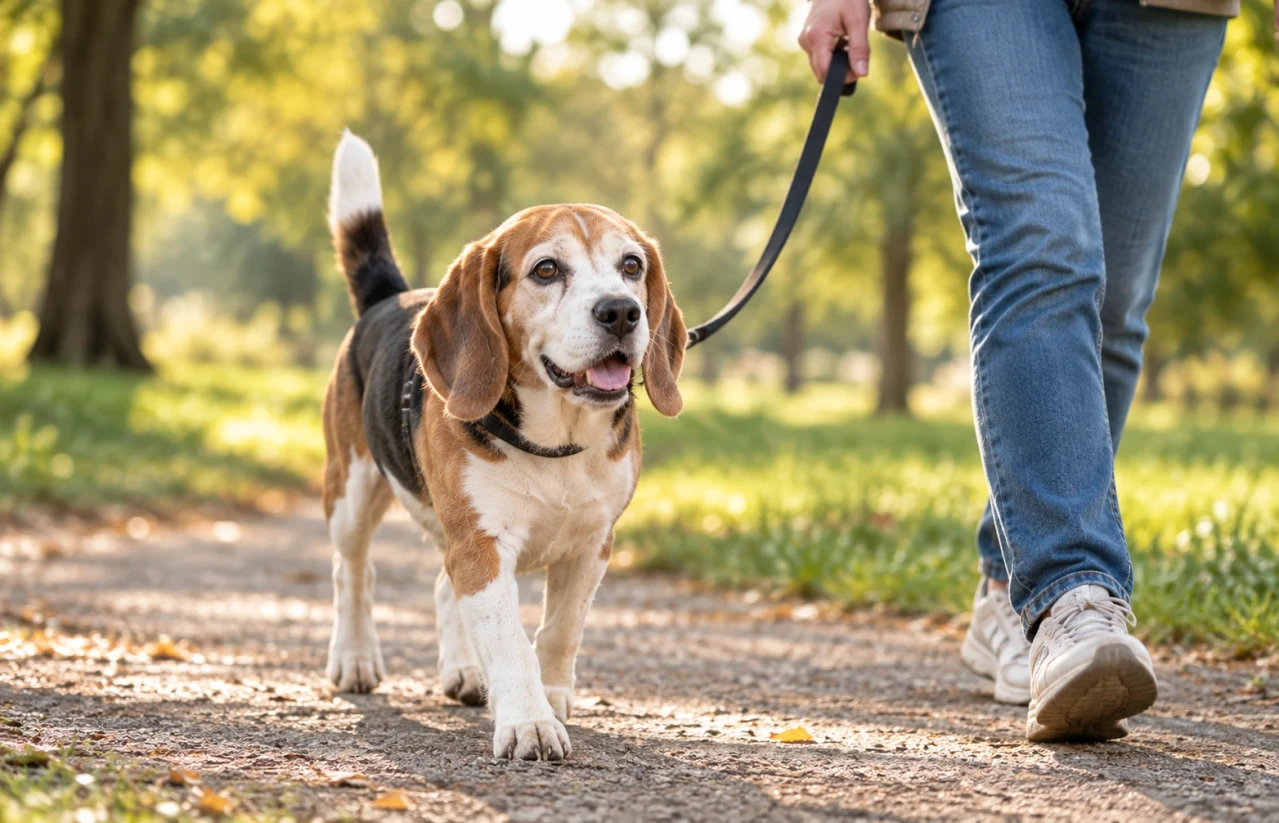
When Is a Beagle Considered a Senior?
Most Beagles begin transitioning into the senior life stage at approximately 8–10 years old.
AVMA guidance gives an average senior range of 8–10 years for medium-sized dogs weighing approximately 20–50 pounds. Since many Beagles weigh between 20 and 30 pounds, this is a useful general range for the breed. Smaller Beagles may enter this stage slightly later, while health problems can cause another dog to need senior-focused care earlier.
A practical Beagle senior guide is:
Beagle age | General stage |
|---|
Birth to 12 months | Puppy |
1–3 years | Young adult |
3–7 years | Adult |
7–9 years | Mature adult |
8–10 years | Senior transition |
10–14 years | Senior |
15 years and older | Very senior |
Senior age is not a diagnosis. A senior Beagle can still be active, curious, social, and interested in daily life.
For a full senior-care article, add a future internal link to the Senior Beagle Care Guide.
Beagle Life Stages
Puppy: Birth to About 12 Months
Beagle puppies develop quickly during their first year. This stage includes teething, toilet training, socialization, basic obedience, handling practice, and learning to walk safely without following every scent.
Puppies need age-appropriate food, veterinary care, safe exercise, rest, and consistent routines. Avoid using human-age comparisons to decide feeding, vaccination, or medical care.
Young Adult: About 1–3 Years
Young adult Beagles are usually physically mature or close to mature, but their behavior may still be energetic and impulsive.
This stage requires continued training, secure walking equipment, daily exercise, scent-based activities, and controlled portions. A Beagle’s food motivation can be useful during training, but treats should still be counted as part of daily intake.
Adult: About 3–7 Years
Adult Beagles generally have stable physical development and established routines.
Important priorities include healthy body condition, regular movement, mental enrichment, dental care, ear checks, nail care, and routine veterinary examinations.
Mature Adult: About 7–9 Years
A mature Beagle may still act energetic but can begin showing subtle changes in stamina, recovery time, body condition, or movement.
This is a useful stage for discussing future senior care with a veterinarian and creating baseline information about weight, teeth, mobility, and general health.
Senior: About 9–14 Years
Senior Beagles may require changes to exercise intensity, food portions, home access, dental care, and veterinary monitoring.
Exercise should usually continue unless a veterinarian advises otherwise, but it may need to become shorter, gentler, or divided into multiple sessions.
Very Senior: About 15 Years and Older
At this stage, comfort and quality of life become the main priorities.
A very senior Beagle may need soft bedding, nonslip surfaces, easier access to food and water, shorter outdoor trips, help with stairs, and more frequent veterinary guidance.
Important Beagle Age Milestones
3-Month-Old Beagle
A three-month-old Beagle is a young puppy. Socialization, gentle handling, toilet training, safe exploration, and basic routines are important.
6-Month-Old Beagle
A six-month-old Beagle is still a puppy but may be entering adolescence. Energy, curiosity, chewing, pulling, and selective listening may increase.
1-Year-Old Beagle
A one-year-old Beagle is approximately 15 human years old and is entering young adulthood.
2-Year-Old Beagle
A two-year-old Beagle is approximately 24 human years old and is normally an adult dog.
5-Year-Old Beagle
A five-year-old Beagle is approximately 38 human years old and is usually in a stable adult stage.
8-Year-Old Beagle
An eight-year-old Beagle is approximately 51 human years old and may be entering the senior transition.
10-Year-Old Beagle
A ten-year-old Beagle is approximately 60 human years old and is normally considered senior.
12-Year-Old Beagle
A twelve-year-old Beagle is approximately 69 human years old and may need more age-adjusted care.
15-Year-Old Beagle
A fifteen-year-old Beagle is approximately 83 human years old and is very senior.
For a more detailed puppy-to-adult timeline, add a future internal link to Beagle Growth Stages.
Beagle Care by Age
Beagle Puppy Care
Beagle puppies need consistent training, socialization, age-appropriate nutrition, sleep, safe play, and regular veterinary care.
Because Beagles are scent-driven dogs, begin recall training in safe enclosed spaces and use secure walking equipment outside. Do not expect a young puppy to ignore interesting smells without training and supervision.
Adult Beagle Care
Adult Beagles need daily physical movement and mental activity.
Useful activities include walks, sniffing opportunities, food puzzles, search games, and short training sessions. Measure meals and treats rather than estimating portions.
Mature Beagle Care
During mature adulthood, monitor weight, dental condition, ears, nails, stamina, movement, sleep, and behavior.
The RVC VetCompass study found obesity or excess weight, periodontal disease, overgrown nails, and ear inflammation among commonly recorded Beagle disorders. This makes weight control, dental care, nail care, and ear observation particularly relevant throughout adulthood.
Senior Beagle Care
Senior Beagles still need activity, but exercise should match the dog’s comfort and recovery.
Consider:
Shorter or more frequent walks.
Nonslip mats on smooth floors.
Comfortable bedding.
Easier access to favourite resting places.
Measured food portions.
Dental monitoring.
Regular ear checks.
Gentle scent games.
Predictable routines.
Veterinary assessment of new pain, stiffness, confusion, or appetite changes.
Do not begin supplements, medication, or a restrictive senior diet without discussing your Beagle’s individual needs with a veterinarian.
Common Aging Signs in Beagles
Possible age-related changes include:
Gray hair around the muzzle.
More sleep.
Lower stamina.
Slower recovery after exercise.
Stiffness after resting.
Difficulty climbing stairs.
Reduced hearing.
Changes in vision.
Dental problems.
Weight gain or weight loss.
Muscle loss.
Changes in appetite.
Increased anxiety.
Changes in toilet habits.
Less interest in play.
Confusion or changes in familiar routines.
Aging happens gradually. Sudden, painful, severe, or rapidly worsening changes should not be dismissed as normal aging. Contact a veterinarian when you are concerned about your Beagle’s movement, appetite, breathing, behavior, weight, dental comfort, hearing, vision, or general quality of life.
Helpful Beagle and Dog Age Pages
Use these internal links where the destination pages are complete and live:
After the related breed pages have been manually completed, you can also add:
Dachshund Age Calculator
Jack Russell Terrier Age Calculator
Cocker Spaniel Age Calculator
Basset Hound Age Calculator