Animal Age Calculator

Dog

Poodle age in human years

Use our Poodle age calculator to convert Poodle age in human years. See Toy, Miniature, and Standard Poodle age charts, life stages, senior age, lifespan, and care tips.

Poodle age chart

Swipe the table sideways to see all columns.

Poodle age chart
AgeHuman ageLife stage
3 monthsAbout 5Puppy
6 monthsAbout 10Puppy
9 monthsAbout 14Young Adult
1 yearAbout 15Young Adult
2 yearsAbout 24Adult
3 yearsAbout 29Adult
4 yearsAbout 34Adult
5 yearsAbout 39Adult
6 yearsAbout 44Adult
7 yearsAbout 49Adult
8 yearsAbout 54Adult
9 yearsAbout 59Senior
10 yearsAbout 64Senior
11 yearsAbout 69Senior
12 yearsAbout 74Senior
13 yearsAbout 79Senior
14 yearsAbout 84Senior
15 yearsAbout 89Senior
16 yearsAbout 94Senior
17 yearsAbout 99Senior
18 yearsAbout 104Senior
19 yearsAbout 109Senior
20 yearsAbout 114Senior

This chart is a general estimate. Real aging varies with genetics, weight, health, diet, and veterinary care.

Poodle Age Calculator: Poodle Age in Human Years

Poodle Age Calculator: Poodle Age in Human Years

Use this Poodle age calculator to estimate your Poodle age in human years. Enter your Poodle’s age in years and months to see the estimated human-age equivalent, life stage, senior age, average lifespan, and a short explanation of what the result means. Poodles are not all the same size, so age estimates work best when you choose the correct type: Toy Poodle, Miniature Poodle, or Standard Poodle. A Toy Poodle usually follows a toy/small dog aging pattern, while a Standard Poodle may age closer to a medium or large dog. As a quick guide, a 1-year-old Poodle is about 15 human years old, a 2-year-old Poodle is about 24 human years old, and after age 2 the estimate changes based on size. A 10-year-old Toy Poodle may be around 56 human years old, while a 10-year-old Standard Poodle may be closer to 60–68 human years depending on size and health. This page includes a Poodle age chart, calculator, life stages, senior age guide, lifespan notes, and care tips from puppy to senior age.
Check Our Dog Age Calculator in human years
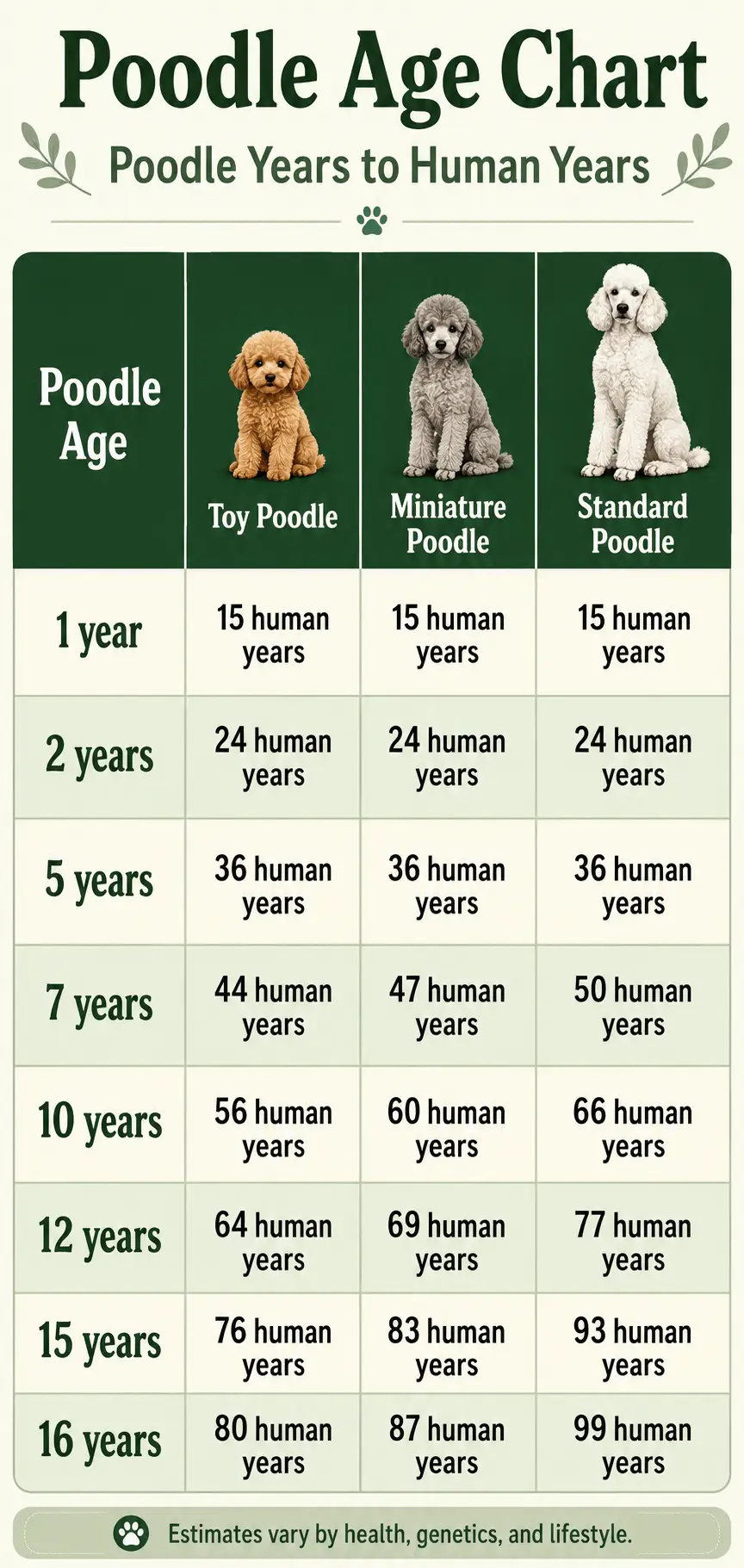
Poodle age chart comparing Toy, Miniature, and Standard Poodle years to human years.

Toy Poodle Age Chart: Toy Poodle Years to Human Years

Toy Poodles mature quickly in their first two years, then age more gradually as adults — and thanks to their small size, they tend to reach the senior stage later, and live longer, than medium and large breeds. Use the chart below as a quick-scan reference alongside the calculator above.

Why the Old “7-Year Rule” Doesn't Work for Toy Poodles

The traditional multiply-by-7 rule assumes every dog ages at one constant speed it doesn't. Per the American Veterinary Medical Association's general guideline, the first year of a dog's life is closer to 15 human years, the second year adds about 9 more, and each year after that adds roughly 4–5 human years. Small breeds like the Toy Poodle mature fastest early on, then age more slowly, and often live 12–18 years , meaningfully longer than most large-breed dogs.

Toy Poodle Age in Months: The First Year, Stage by Stage

Nearly all of a Toy Poodle's growth happens before their first birthday, and much of it in the first six months. Here's what to expect month by month:

Age

Typical Weight

What's Happening

0–2 months

0.5–2 lbs

Nursing stage with the mother; eyes/ears open around 2 weeks; weaning starts by 6–8 weeks.

2–4 months

2–4 lbs

New home, teething begins, first vaccinations, early socialization and crate training.

4–6 months

3–5 lbs

Steady growth continues. Adult teeth come in. Feed 3–4 small meals to help prevent hypoglycemia.

6–9 months

4–6 lbs

Close to adult height and weight. Personality becomes more defined; consistent, reward-based training works best.

9–12 months

4–6 lbs

Growth slows sharply. Most Toy Poodles are at or very near full adult weight by 12 months.

Toy Poodle Growth & Adult Size

Male and female Toy Poodles grow at roughly the same rate, so there's no separate chart needed by sex. Most Toy Poodles reach their adult height and are close to their adult weight by around 9–12 months.

•     Full-grown Toy Poodle size: no more than 10 inches tall at the shoulder and 4–6 lbs, the smallest of the three Poodle varieties (Standard, Miniature, Toy).

•     When Toy Poodles stop growing: most are at or very near adult size by 9–12 months old.

•     Puppy hypoglycemia risk: because they're so small, Toy Poodle puppies are prone to low blood sugar if meals are skipped — feed 3–4 small meals a day until at least 4–6 months old.

•     Watch for excess weight in adults: even a pound or two of extra weight is significant on a 4–6 lb frame and adds real strain to joints and the airway.

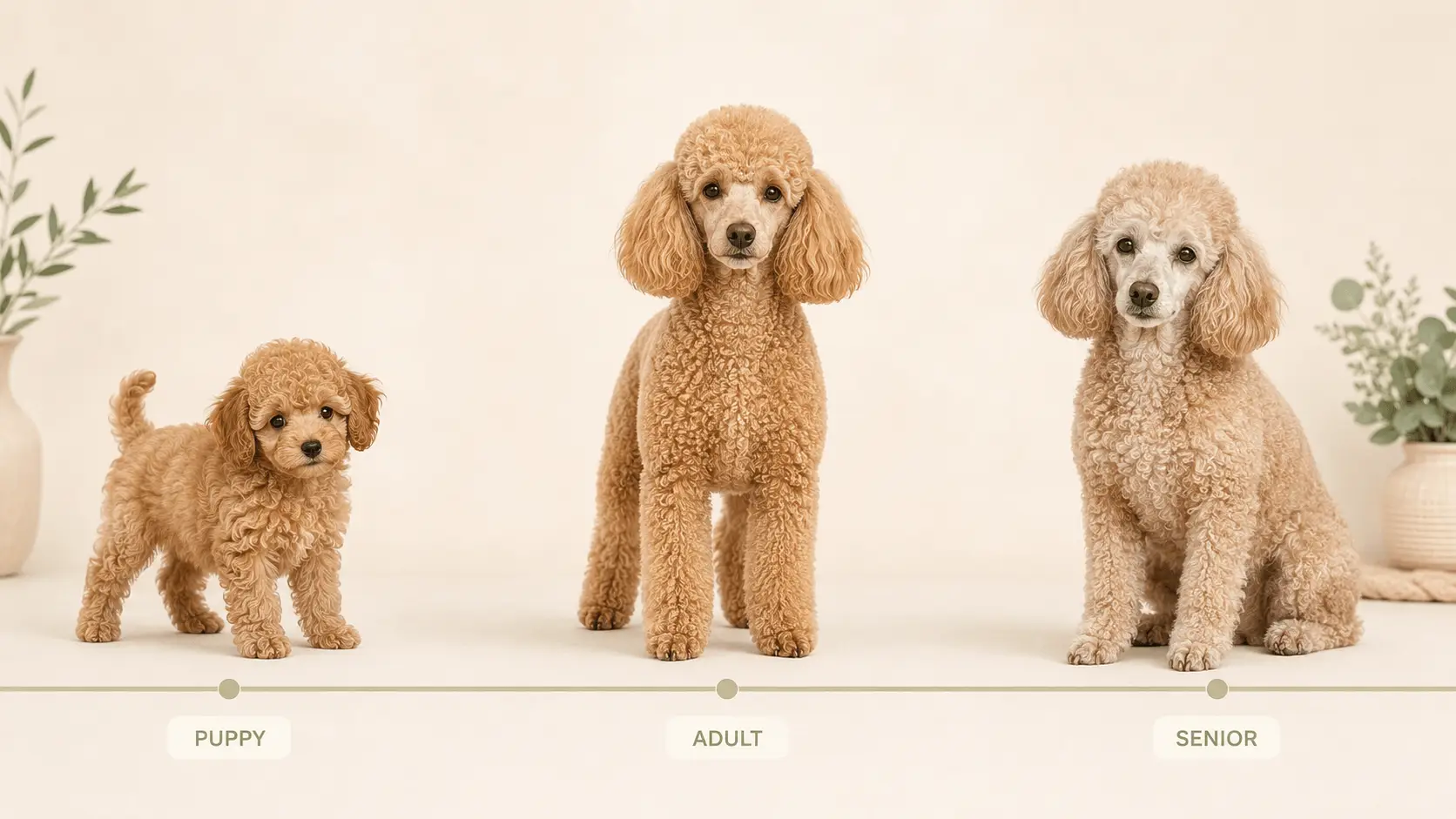
Poodle life stages from puppy to adult to senior.

Toy Poodle Life Stages and What Each One Means for Care

Life Stage

Typical Age

What It Means for Care

Puppy

0–12 months

Rapid growth, teething, house-training, socialization, small frequent meals.

Young Adult

1–3 years

Full size reached; peak energy; establish grooming, diet, and exercise routine.

Adult

4–7 years

Stable weight and temperament; annual vet checkups; consistent dental care.

Senior

8–10 years

Aging begins; more frequent vet visits; watch joints, eyes, and teeth closely.

Elderly

11+ years

Slower movement, more rest, gentler exercise, closer comfort-focused care.

Is a Toy Poodle Right for You? The Good and the Not-So-Good

Toy Poodles were bred down from the working Standard Poodle into a companion-sized dog, and they kept all of the breed's famous intelligence in a lap-sized body. Here's a balanced, A-to-Z style look at what owning one is really like.

Why Toy Poodles Make Great Pets

•     Exceptionally intelligent and eager to please: consistently ranked among the smartest dog breeds, which makes them easy and fun to train with positive reinforcement.

•     Low-shedding coat: their curly, continuously growing hair sheds very little, which is why they're popular with people managing allergies (though no dog is 100% hypoallergenic).

•     Great family and apartment dogs: gentle with children and other pets when socialized early, and their small size suits smaller homes.

•     Long lifespan: typically 10–18 years, giving owners many years together.

•     Lower exercise needs: a daily walk plus play is usually enough, though their minds need just as much exercise as their bodies.

•     Playful, self-confident personality: big character in a small package, and genuinely entertaining companions.

Why a Toy Poodle Might Not Be the Right Fit

•     High grooming demands: their hair grows continuously and mats easily, requiring near-daily brushing and a professional trim every 4–6 weeks.

•     Separation anxiety risk: they bond closely with their families and can struggle when left alone for long periods.

•     Sensitive to stress: sudden changes in routine or environment can even trigger gastrointestinal upset in some dogs.

•     Prone to barking: well-known for being vocal, especially when bored or under-stimulated.

•     Fragile as puppies: their tiny size means they can be accidentally injured during rough play, so interactions with young children need supervision.

•     Higher lifetime grooming and vet costs: regular professional grooming plus breed-specific health monitoring adds up over a long lifespan.

•     Needs mental stimulation: a bored, understimulated Toy Poodle is more likely to bark, jump, and become destructive.

Common Toy Poodle Health Problems and Diseases

Toy Poodles are a generally healthy breed overall, but responsible ownership means knowing what they're genetically predisposed to, so problems can be caught early.

Progressive Retinal Atrophy (PRA)

An inherited condition that gradually breaks down the retina's photoreceptor cells. It typically starts with difficulty seeing in low light and can progress to full blindness over time. There is currently no effective treatment, so reputable breeders screen for it.

Patellar Luxation

A common small-breed condition where the kneecap slips out of its groove, sometimes causing a visible skip or hop in the dog's gait. Mild cases can often be managed with weight control, joint supplements, and anti-inflammatory medication; more severe cases may need surgery.

Legg-Calve-Perthes Disease

A condition affecting young dogs, most often Toy Poodle puppies under 18 months old, where the head of the thigh bone breaks down from reduced blood supply, causing pain and limping. Treatment ranges from pain management to surgery in severe cases.

Chronic Ear Infections

Toy Poodles develop ear infections more often than most breeds, partly because of their long ear canals and excess curly hair that traps moisture and debris. Weekly ear checks, regular cleaning, and trimming (not plucking) the ear hair help prevent flare-ups. Recurring infections are often linked to underlying allergies.

Dental Disease

One of the most common conditions in small breeds. Plaque and tartar buildup leads to gum infection and, eventually, tooth and bone decay. Daily brushing and routine professional cleanings are the best prevention.

Tracheal Collapse

Toy Poodles are genetically predisposed to this condition, where weakened cartilage causes the windpipe to flatten, leading to a dry, honking cough that worsens with excitement or eating. Keeping a healthy weight and switching from a collar to a harness for walks helps prevent and manage it.

Von Willebrand's Disease (vWD)

A genetic blood-clotting disorder seen fairly often in the breed. Affected dogs may bleed longer than normal after injury or surgery. Most vets recommend testing for vWD before any planned procedure, including spay or neuter surgery.

Hypoglycemia (Puppies)

Because Toy Poodle puppies are so small, they have limited energy reserves and can develop dangerously low blood sugar if a meal is skipped or they go too long without eating. Small, frequent meals through at least 4–6 months of age help prevent this.

Feeding a Toy Poodle: Diet and Nutrition by Life Stage

•     Puppies (0–12 months): feed a high-quality small-breed puppy formula in 3–4 small meals a day to prevent hypoglycemia and support steady growth.

•     Adults (1–7 years): two to three measured meals a day of a complete, AAFCO-compliant small-breed formula; ask your vet about dental-focused diets to help manage plaque.

•     Watch treat calories closely: treats should make up no more than about 10% of daily calories — easy to overshoot on a 4–6 lb dog.

•     Consider omega-3 support: fish oil or omega-3-fortified diets can help support skin, coat, joints, and heart health.

•     Seniors (8+ years): transition gradually to a senior formula with controlled calories and added joint support (glucosamine/chondroitin).

•     Fresh water at all times: especially important for small dogs, who dehydrate faster than larger breeds.

Grooming and Daily Care

•     Daily brushing: unless clipped very short, a Toy Poodle's continuously growing hair needs to be brushed to the roots daily to prevent painful mats.

•     Professional grooming: a trim every 4–6 weeks is essential, regardless of haircut style.

•     Bathing: every 2–4 weeks with a gentle, dog-specific shampoo and conditioner.

•     Eye care: wipe eyes daily with a soft, damp cloth to prevent tear staining, and trim hair around the eyes to prevent irritation.

•     Ear care: clean weekly to every other week and keep ear hair trimmed (not plucked) to reduce infection risk.

•     Teeth brushing: daily brushing with a dog-specific toothpaste is the single best way to prevent dental disease in this breed.

•     Nail trims: every 3–4 weeks to keep gait and posture healthy.

Exercise and Mental Stimulation Needs

Toy Poodles have lower physical exercise needs than many breeds — a daily walk plus a play session is usually plenty. But their intelligence means they need just as much mental exercise as physical: puzzle toys, scent games, obedience training, and even agility all help prevent the boredom that leads to excess barking and destructive behavior. Use a harness rather than a collar on walks, since pulling against a collar can aggravate tracheal collapse. Puppies should stick to gentle, supervised play while bones are still developing; seniors do well with shorter, more frequent, low-impact walks.

Caring for a Senior Toy Poodle

     More frequent vet visits: every 6–12 months from about age 8–10 onward, with bloodwork to catch age-related conditions early.

•     Dental care becomes even more important: years of plaque buildup make professional cleanings and daily brushing critical for seniors.

•     Watch vision and hearing: PRA and normal age-related decline can both affect a senior Toy Poodle — adjust the home environment (consistent furniture placement, night-lights) if vision starts to fade.

•     Joint support: omega-3s and joint supplements can help with the mild stiffness that comes with age, especially in dogs with a history of patellar luxation.

•     Maintain a healthy weight: even more critical in seniors, since extra weight compounds joint and airway strain that come with age.

Frequently asked questions

How old is a Toy Poodle in human years?+

A 1-year-old Toy Poodle is roughly 15 human years old, and a 2-year-old Toy Poodle is about 24. After that, each additional year adds roughly 4–5 human years. Use the calculator above for an exact figure based on your dog's precise age.

What is the life expectancy of a Toy Poodle?+

Most Toy Poodles live 10–18 years, and many stay active and healthy well into their teens with good weight control, dental care, and regular veterinary attention.

At what age is a Toy Poodle considered a senior?+

Most vets consider Toy Poodles seniors starting around 8–10 years old, though many remain playful and alert well past this point.

What is the most common health problem in Toy Poodles?+

Dental disease and chronic ear infections are the two most common issues, though the breed is also predisposed to patellar luxation, progressive retinal atrophy, and tracheal collapse.

How big does a full-grown Toy Poodle get?+

A full-grown Toy Poodle is no more than 10 inches tall at the shoulder and weighs 4–6 lbs — the smallest of the three Poodle sizes (Standard, Miniature, and Toy).

At what age do Toy Poodles stop growing?+

Most Toy Poodles reach their adult height and are close to their adult weight by 9–12 months old.

Are Toy Poodles hypoallergenic?+

No dog is 100% hypoallergenic, but Toy Poodles shed very little and are a popular choice for people managing pet allergies.

Is 10 years old for a Toy Poodle?+

Yes — a 10-year-old Toy Poodle is roughly 56–60 in human years and is generally considered a senior, though many remain active with good care.

Related

More undefined breeds